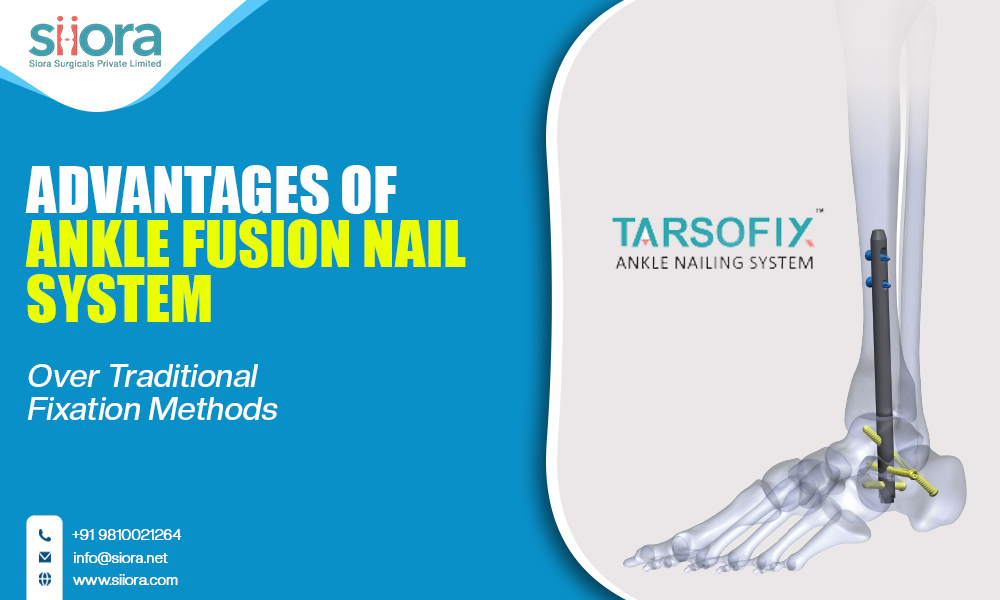
Ankle arthrodesis, often referred to as ankle fusion, is a well-established surgical treatment used for patients dealing with severe ankle arthritis, deformities, or injuries that make walking difficult. While the focus of most discussions centers on the surgeon’s skill and the patient’s healing process, many overlook a crucial detail: the surgical ankle instruments themselves. The tools chosen for the operation can have a direct impact on how smoothly the procedure goes, how reliably the bones fuse, and how satisfied the patient feels in the long run.
Why Instrument Precision Matters?
The primary goal of ankle arthrodesis is to create a strong union between the tibia and the talus. To achieve this, the cartilage at the joint surfaces must be completely removed so that bone-to-bone contact can occur. This is where high-quality instruments such as sharp curettes, osteotomes, and accurate burrs make a difference. If the edges are blunt or the tool design is poor, leftover cartilage can prevent proper fusion. On the other hand, precise instruments allow the surgeon to prepare clean surfaces efficiently, giving the joint the best chance to heal solidly.
Ensuring Strong Bone Fixation
Once the bone surfaces are ready, the next challenge is fixing them in the correct position so they fuse without shifting. Surgeons typically rely on screws, plates, or sometimes external fixators to secure the ankle. Here, guides, drills, and screwdrivers designed for orthopedic use play an essential role. Well-crafted instruments let the surgeon place implants at the right angle and depth, which helps maintain stability. When fixation is accurate, patients have smoother recoveries and fewer complications such as nonunion or hardware failure.
Reducing Risks During Surgery
Every surgery carries risks, but careful use of refined instruments can lower them. Instruments with controlled torque and sharp tips minimize unintentional trauma to surrounding tissues like nerves and blood vessels. For example, reamers with protective structures make bone shaping safer, while retractors designed with ergonomic grips keep soft tissues away from the surgical site without applying excessive pressure. When instruments are dependable, there is less chance of bleeding, infection, or tissue damage, which translates into better safety for the patient.
Making Surgery More Efficient
Long operations are rarely beneficial. Extended time in the operating room raises infection risk and adds unnecessary strain to both the surgical team and the patient under anesthesia. Well-maintained instruments that perform consistently help surgeons work more efficiently. Power tools that do not stall and modular kits designed for versatility cut down delays. This streamlined process reduces complications and often improves the overall outcome for patients who can start rehabilitation faster.
Patient Outcomes Tied to Tool Quality
Ultimately, the goal of ankle arthrodesis is to help patients regain mobility without pain. Studies and surgical experience show that outcomes are better when instruments perform optimally. Clean bone preparation and precise implant placement contribute to higher fusion rates and fewer revision surgeries. Patients treated with the aid of modern, reliable tools generally regain their ability to walk with less discomfort and enjoy better stability in their everyday activities.
Advancements in Instrument Technology
Over the last two decades, surgical instrumentation has evolved rapidly. Traditional tools have been replaced—or at least supplemented—by lightweight alloys, single-use sterile tools, and more ergonomic designs that improve handling. Some centers are also adopting navigation systems and robotic assistance for added precision. These advances are gradually reshaping how ankle fusion is performed, giving surgeons more confidence and patients more consistent results.
Final Thoughts
The outcome of ankle arthrodesis is never about the surgeon alone. The quality of trauma instruments has a decisive influence on whether bones fuse as intended, operations run smoothly, and patients return to daily life without pain. Choosing the right tools means reducing surgical risks, improving fusion rates, and shortening recovery periods. As technology continues to evolve, the role of instruments in ankle surgery will only grow more significant—making them an inseparable factor in long-term success.
 What is the Difference Between Cortical and Cancellous Screws