Fractures have become common and we all experience them once in our life. It is a condition characterized by a broken bone, and this could occur due to one or another reason. Traumatic injury is among the commonest causes of fractures but, they may also occur due to several non-traumatic causes.
Fractures occurring due to automobile accidents or falling from a height are often serious and they require trauma implants for the stabilization of bones. In some cases, the fracture is so severe that even conventional open surgery cannot fix it and, in such cases, the External Fixator Device is used.
Well, in this post, our focus is on discussing one of the fractures that occur in our forearm, specifically at the wrist joint. We are talking about the distal radius fracture and now we will see what it is.
Distal Radius Fracture – An Overview
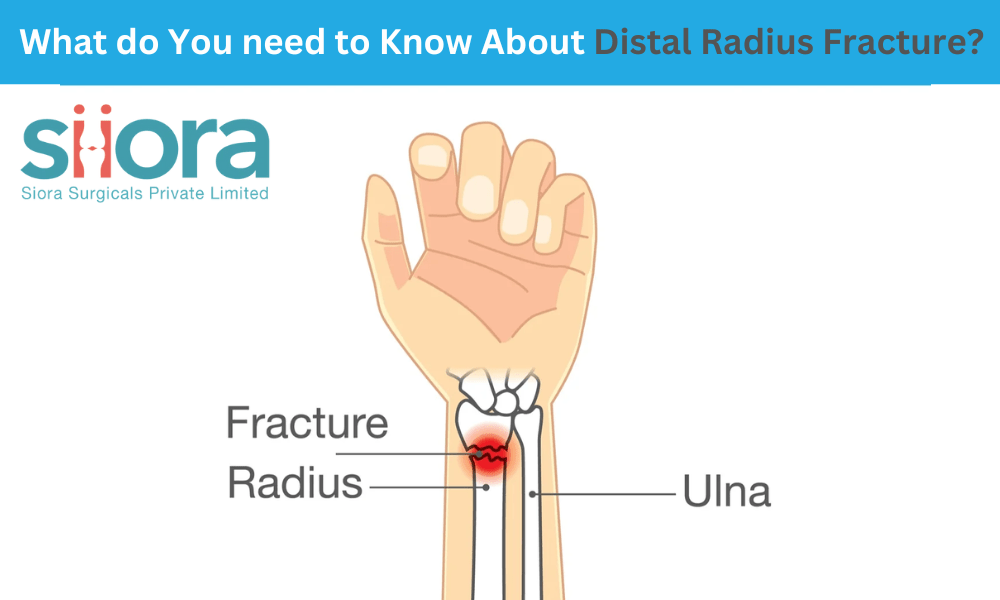
Our forearm contains two bones radius and ulna. Here, we will see the fracture occurring in the radius. The lower end of the radius bone, where it meets your wrist, is called the distal radius. A break in this part of the bone is called a distal radius fracture.
Falling on an outstretched hand is the commonest cause of the condition and in some cases, sports injuries may be the reason. This type of fracture could either be an isolated one or occur with injuries to other nearby bones.
What Are the Types of Distal Radius Fracture?
Depending upon the type of break, distal radius fracture can be classified into two types:
Smith Fracture
This type of fracture is uncommon and it generally occurs when someone falls on a bent wrist. A Smith fracture causes the lower part of the radius bone to move downward and toward the palm.
Colles Fracture
The side view of the wrist in the case of the Colles fracture appears to be a fork facing down. This type of fracture occurs when someone breaks the fall and lands directly on the palm.
What Are the Symptoms of Distal Radius Fracture?
Pain is the most common symptom that will be felt immediately after the fracture. With this, the person will also experience swelling and tenderness around the wrist. Some deformities may also be seen in severe cases.
How to Diagnose Distal Radius Fracture?
The right diagnosis of the condition is important to get the right treatment, and for that, the person will check the medical history first to know the symptoms and their cause. After that, a physical examination will be performed and the healthcare service provider will look for signs and symptoms of the fracture. Now, to identify the type of distal radius fracture and its severity, the doctor will order certain imaging tests including:
- X-ray
- CT scan
- MRI
- Bone Scan
What is the Treatment for Distal Radius Fracture?
The treatment will depend upon the diagnostic reports. If the fracture is in good condition and no displacement is there, it can be managed with medication and the application of a cast. While on the other hand, severe fractures will require surgery to realign the fractured bone using Orthopedic Metal Plates and screws.
For world-class trauma implants and instruments, contact Siora Surgicals Pvt. Ltd., a renowned orthopedic manufacturer in India. The company has experience of over 30 years and is also known as a reliable OEM/contract manufacturing service provider around the world. Siora has a distributor presence in over 50 countries and is also looking to supply its CE-certified orthopedic devices in USA.
 What is the Difference Between Cortical and Cancellous Screws
Leave a comment