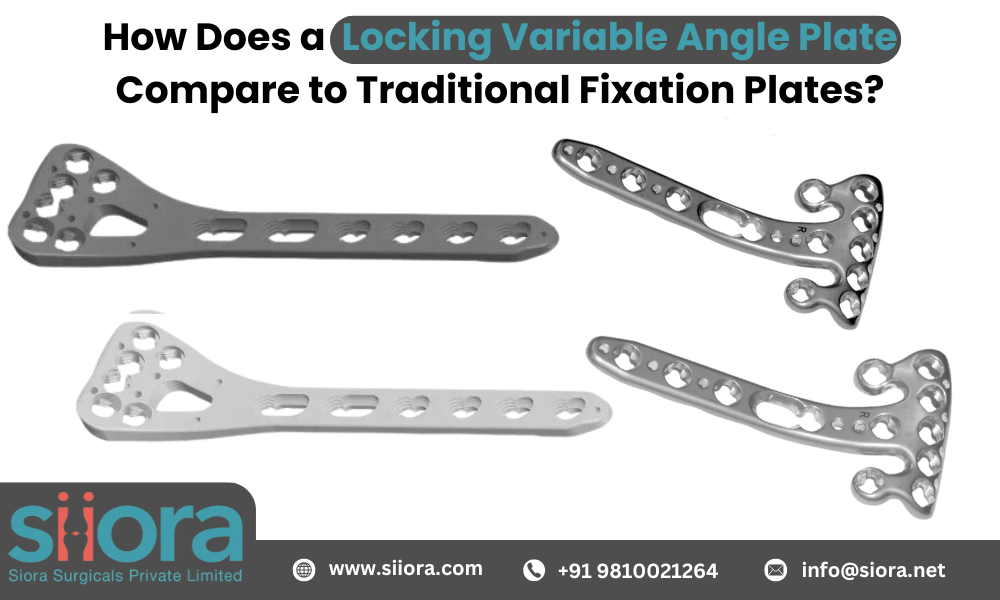
Orthopedic surgeries often involve the use of fixation plates to stabilize fractures and promote healing. With advancements in medical technology, locking variable angle plates has emerged as a superior alternative to traditional fixation plates. Understanding the differences between these two options is crucial for surgeons and patients alike to make informed decisions about treatment.
Traditional Fixation Plates
Traditional fixation plates have been a mainstay in orthopedic surgery for decades. These plates are secured to the bone using standard screws that rely on friction between the plate and bone for stability. While effective in many cases, traditional plates have some limitations.
- Dependency on Bone Quality
The stability of traditional plates depends heavily on the quality of the bone. In cases of osteoporotic or fragile bones, the screws may loosen over time, leading to reduced fixation strength.
- Limited Angulation
Traditional screws are inserted at fixed angles, offering limited flexibility. This rigidity can make it challenging to achieve optimal placement in anatomically complex fractures.
- Stress Shielding
These plates often transfer load away from the bone, potentially leading to stress shielding. Over time, this can weaken the bone and slow the healing process.
Locking Variable Angle Plates
Locking variable angle plates are an evolution in orthopedic fixation technology. These plates combine the benefits of locking plates with the added advantage of variable screw angulation. This innovation addresses many of the challenges posed by traditional fixation plates.
- Enhanced Stability
Locking plates secure screws directly to the plate, creating a fixed-angle construct. This eliminates reliance on bone quality for stability, making them ideal for patients with weak or compromised bones.
- Variable Screw Angulation
The ability to insert screws at various angles allows surgeons to customize the fixation to the patient’s unique anatomy. This is particularly beneficial for treating complex fractures, as it ensures optimal screw placement and better stabilization.
- Reduced Stress Shielding
Locking plates distribute loads more evenly across the bone, minimizing stress shielding. This promotes natural bone remodeling and accelerates the healing process.
- Lower Risk of Screw Loosening
Since the screws lock into the plate, there is less risk of them loosening over time, even in dynamic or high-load areas. This provides long-term reliability, especially for active patients.
Conclusion
Locking variable angle plates represents a significant advancement over traditional fixation plates. Their superior stability, adaptability, and reduced dependency on bone quality make them the preferred choice for many orthopedic procedures. While traditional plates remain viable in certain situations, the versatility and reliability of locking variable angle plates provide enhanced outcomes for both surgeons and patients.
As orthopedic technology continues to evolve, the adoption of these advanced plates underscores the importance of innovation in improving patient care and surgical success.
To get an international standard range of variable angle locking plates and other orthopedic implants & instruments, contact Siora Surgicals Pvt. Ltd., a renowned manufacturer and supplier of orthopedic devices in India. The company has a distributor presence in 50+ countries and is also looking to be known as a trusted orthopedic company in USA.
 What is the Difference Between Cortical and Cancellous Screws
Leave a comment