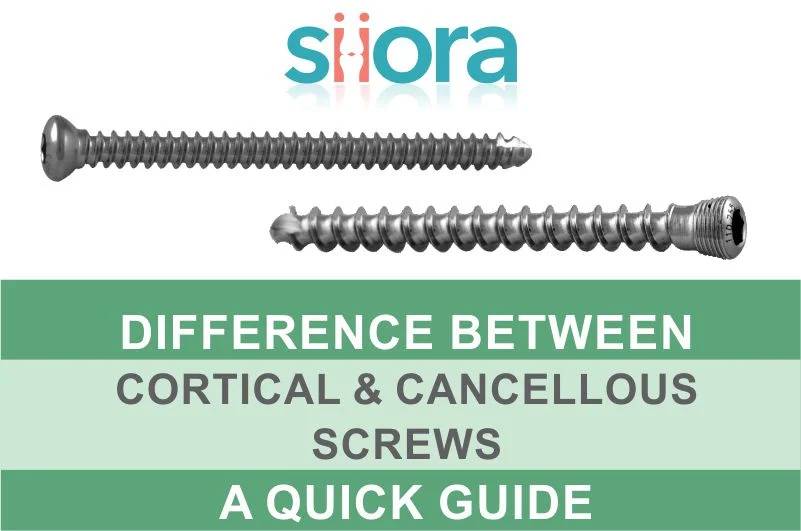
The human skeleton may seem like a rigid structure, but it’s magical as it is constantly adapting and repairing itself. Sometimes, however, fractures occur that require a surgeon’s intervention. In these cases, specialized locking plates and orthopedic screws play a crucial role in holding the broken bone fragments together and promoting healing. But with different types of screws available, understanding the difference between cortical and cancellous screws is essential.
Cortical vs. Cancellous – The Basic Difference
Before diving into the screws themselves, let’s take a quick look at the bone anatomy. Our bones consist of two main types of tissue:
- Cortical bone: This dense, hard outer layer makes up about 80% of the skeleton. It’s strong and can withstand significant weight-bearing forces. Imagine the cortical bone as the sturdy shell of a peanut.
- Cancellous bone: Also known as spongy bone, this fills the inner cavities of long bones and forms the core of some bones like vertebrae. It’s less dense than cortical bone, with a honeycomb-like structure that provides support and shock absorption.
The Screw Design
Let us see the difference between the design of the cortical and cancellous screws. They are typically made from medical-grade titanium or stainless steel and come in various sizes and configurations. But what sets them apart?
- Thread Design: The most significant difference lies in the thread pattern. Cortical screws boast a fine thread pitch, meaning there are more threads packed closer together along the screw shaft. This design allows them to grip tightly onto the dense surface of cortical bone. On the other hand, cancellous screws have a coarser thread pitch with fewer, deeper threads. This configuration provides better purchase within the porous structure of cancellous bone.
- Self-Tapping Advantage: Many cortical screws are self-tapping. This means they can create their own pilot hole as they are inserted, streamlining the surgical process and minimizing bone damage. Cancellous screws, due to their focus on maximizing hold within cancellous bone, typically require pre-drilled holes.
Choosing the Right Screw for the Job
Surgeons carefully select the type of screw based on the specific location and type of fracture they’re dealing with.
- Cortical Screws: These workhorses excel at securing fractures in the dense cortical bone of the shaft of long bones like the femur or tibia. Their ability to withstand high loads makes them ideal for bones that bear significant weight.
- Cancellous Screws: These shine in areas with cancellous bone, such as the ends of long bones, the pelvis, and vertebrae. Their coarse threads provide excellent purchase within the spongy structure, promoting stability and encouraging healing in these areas.
Beyond the Basics
While thread design and self-tapping capabilities are the key differentiators, there’s more to the story:
- Screw Diameter: The diameter of the screw needs to be appropriate for the size of the bone fragment it’s securing.
- Length: Screw length is crucial for ensuring it reaches through the far cortex, providing optimal fixation.
- Locking vs. Non-Locking: Some screws feature a locking mechanism that allows them to interlock with a plate for added stability.
The Final Word
Cortical and cancellous screws are vital tools in the surgeon’s arsenal for repairing bone fractures. Understanding their distinct designs and functionalities empowers us to appreciate the intricate world of orthopedic medicine.
The orthopedic industry is advancing and to know about the latest advances in product design and patient care, register for the World Orthopedics Conference.
 What is the Difference Between Cortical and Cancellous Screws
Leave a comment